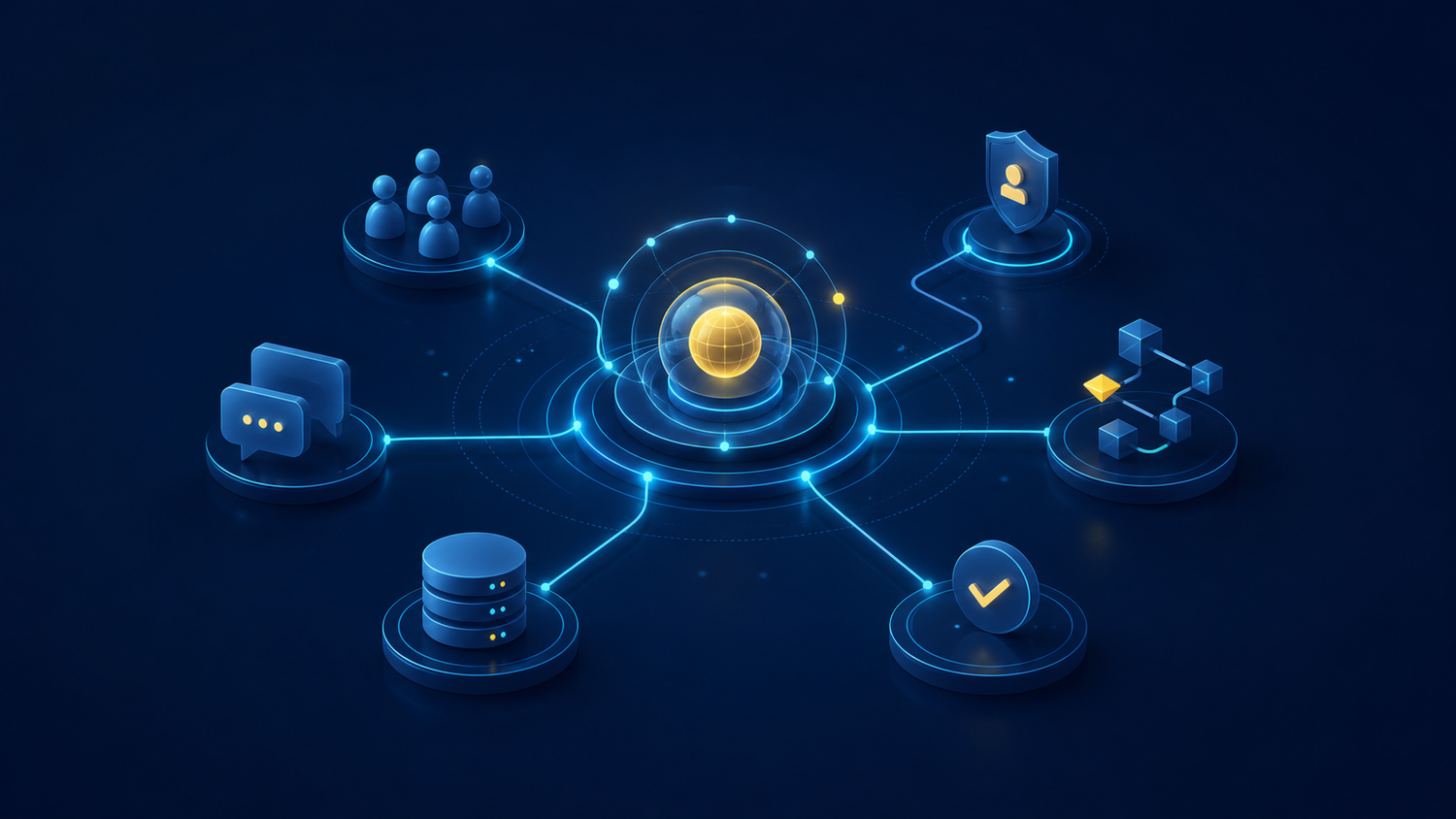
Most teams do not need another chat window. They need a dependable way for people and AI agents to work on real business tasks together, with the right context and clear human control.
That is why Buzz is worth watching. The new open-source workspace from Block puts people, agents, and project activity in one place. It is early, but the response from builders on X points to a real shift in how teams may work with AI.

What people are saying about Buzz on X
The strongest reaction is not about a new AI chatbot. It is about a shared workspace where agents can participate alongside the people doing the work.
Owen Jennings of Block described Buzz as a place “where humans and agents work together seamlessly.” That is a short line, but it captures the idea: AI is moving out of a separate prompt box and into the day-to-day flow of a project.
Nous Research put it more concretely: “The self-hostable workspace from @blocks puts humans and agents in the same messaging channels and codebase.”
Early users are also talking about the practical result. One builder wrote that their team uses special agents for PR review, infrastructure, business intelligence, and customer support. Another called Buzz the first place they had pulled off a chief-of-staff workflow, where one agent manages work across other agents.
There is also an important technical signal for teams already building with agents. Buzz’s Desktop v0.5.0 release added a “bring your own harness” connection point. That makes it possible to connect existing agent systems, including Hermes and OpenClaw, instead of rebuilding every agent from scratch.
Buzz is not asking a team to treat agents as an add-on. It is designing a place where agents can join the work, retain the thread, and help move a project forward.
Buzz is promising, and it is still early
That distinction matters. Buzz itself says, “Come test the early stages with us.” Its own team has described parts of the new harness experience as rough while it improves.
That honesty is a good thing. It also means teams should separate the big idea from the operational work required to make it useful. A workspace can give people and agents a shared room. It does not automatically give an agent your business knowledge, safe access to your tools, reliable workflows, or someone to help when a setup goes sideways.
Where ProductiveBot fits
ProductiveBot and Buzz fit together because they work at different layers.
Buzz can be the shared room. It gives a team a place to see its agents, assign work, discuss outcomes, and keep project context visible.
ProductiveBot is the owned, guided operating environment behind useful agents. It turns a Mac into an AI agent workstation for a business, then adds the business context, skills, connections, guardrails, and support that help agents complete real work.
A shared, agent-native workspace for channels, conversations, project activity, and collaboration between people and agents.
An owned workstation, Company Brain, practical skills and workflows, permission controls, reliable connections, diagnostics, and human support.
From shared conversation to completed work
For a business, the goal is not simply to have an agent in a channel. The goal is to get useful work completed while keeping the right person in control.
Here is what that could look like in practice:
| Business need | What happens in Buzz | What ProductiveBot adds |
|---|---|---|
| Customer questions | Team members and a support agent can review a question in the same thread. | ✓ The agent can use approved business context, connected tools, and an escalation path. |
| Research and planning | An agent can gather findings where the team can discuss them. | ✓ Persistent memory and reusable skills help the work improve instead of starting from zero each time. |
| Operations work | A channel creates a clear place to assign, review, and approve work. | ✓ Workflows connect the agent to the business tools it needs, with permissions and approvals set in advance. |
| Ongoing reliability | The team sees the conversation and outcome. | ✓ Scout and Doctor provide setup guidance, support, and health checks for the agent environment. |
Why the owned layer matters
Every useful agent needs a home. It needs a place to run, a clear set of permissions, and durable context about the work it is allowed to do.
ProductiveBot is built around that responsibility. The customer owns the hardware. Their Company Brain can hold the context that helps an agent understand their business. Skills and integrations give it useful capabilities. Human approval stays available when an action has real consequences.
This is especially valuable as teams mix different agent engines. A business may use Hermes today, OpenClaw tomorrow, and another tool later. ProductiveBot is designed to make those engines usable and supportable without making the customer rebuild their operating environment every time the market changes.
A better question than “Which workspace wins?”
Buzz is an exciting direction for agent collaboration. ProductiveBot does not need to replace it to be valuable.
The better question is: what does a team need around an agent workspace to make it dependable in a real business? That is where ProductiveBot belongs. It helps turn a promising collaboration surface into a practical system for support, operations, research, content, scheduling, and the other work that has to get done.
Buzz can make agents visible participants in the work. ProductiveBot can give those agents the context, capabilities, safety controls, and support needed to turn that participation into completed work.
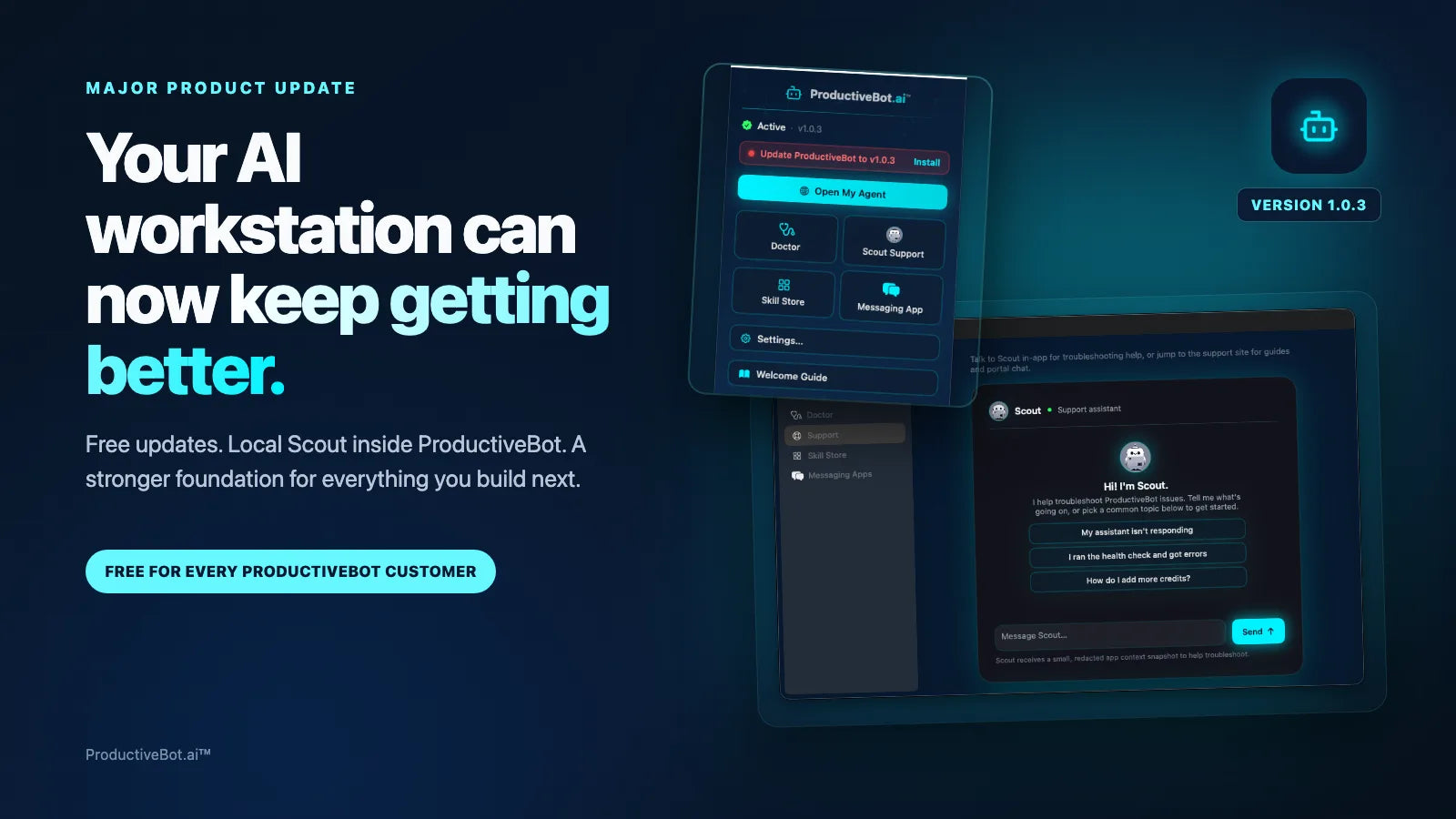
Have questions about bringing AI agents into your team’s workflows? Ask Scout, our AI support agent.
Common Questions
What is Buzz?
Buzz is an open-source workspace designed for people and AI agents to collaborate in shared channels and project conversations. It is still in an early stage of development.
Can Buzz work with OpenClaw or Hermes?
Buzz has introduced early bring-your-own-harness support through ACP. Its release notes name Hermes and OpenClaw among the supported options, but teams should test the current integration before relying on it for critical workflows.
Is ProductiveBot a replacement for Buzz?
No. Buzz can serve as a collaboration layer. ProductiveBot is designed as the owned and guided agent operating environment that provides business context, workflows, controls, and support.
Why does an AI agent need a Company Brain?
Business context helps an agent understand the company, its priorities, and how work should be handled. Without it, the team has to keep repeating the same information and checking more of the basics.
Can a business keep people in control of AI workflows?
Yes. A practical agent system should set clear permissions and allow human review or approval when an action matters. ProductiveBot is designed around human-in-the-loop controls.

Leave a comment
This site is protected by hCaptcha and the hCaptcha Privacy Policy and Terms of Service apply.